
🧠 Mindset
-
Curiosity and effort drive academic success as much as intelligence: Though "intelligence is the single most powerful predictor of academic performance," "Conscientiousness (as marker of effort), and Typical Intellectual Engagement (as marker of intellectual curiosity) are direct, correlated predictors of academic performance." "The additive predictive effect of the personality traits of intellectual curiosity and effort rival that the influence of intelligence. ...a “hungry mind” is a core determinant of individual differences in academic achievement." ("The Hungry Mind: Intellectual Curiosity Is the Third Pillar of Academic Performance," Perspectives on Psychological Science, 2011)
-
Carol Dweck's "growth mindset" — a belief that one can change and grow and is not constrained by one's innate makeup — has received widespread attention and is highly plausible. But attempts to improve student performance by teaching students "growth mindset" thinking has found only weak scientific support: "Overall effects were weak for both meta-analyses. However, some results supported specific tenets of the theory, namely, that students with low socioeconomic status or who are academically at risk might benefit from mind-set interventions." ("To What Extent and Under Which Circumstances Are Growth Mind-Sets Important to Academic Achievement? Two Meta-Analyses," Psychological Science, 2018)
-
Angela Duckworth's "Grit" — "stick-to-it-iveness" — is another famous and intuitively sensible theory of success. "Grit" is highly correlated with "conscientousness", one of the "Big Five personality traits". Conscientious people plan ahead, act responsibly, work hard, control their impulses, and are orderly. Though conscientious students tend to do well in school and in work, scientists have not found strong evidence that teaching students grit is beneficial. ("Much ado about grit: A meta-analytic synthesis of the grit literature," Journal of Personal Social Psychology, 2017)
-
People with positive attitudes toward aging live significantly longer: "older individuals with more positive self-perceptions of aging, measured up to 23 years earlier, lived 7.5 years longer than those with less positive self-perceptions of aging. This advantage remained after age, gender, socioeconomic status, loneliness, and functional health were included as covariates." ("Longevity increased by positive self-perceptions of aging," Journal of Personal Social Psychology, 2002) That said, it's possible people whose family members have tended to live longer, healthier lives are both: a) more inclined to have positive self-perceptions of aging, and, b) more likely to live long, healthy lives, so this may not be causal.
-
Optimistic people live significantly longer: "Previous studies reported that more optimistic individuals are less likely to suffer from chronic diseases and die prematurely. Our results further suggest that optimism is specifically related to 11 to 15% longer life span, on average, and to greater odds of achieving “exceptional longevity,” that is, living to the age of 85 or beyond. These relations were independent of socioeconomic status, health conditions, depression, social integration, and health behaviors (e.g., smoking, diet, and alcohol use)." ("Optimism is associated with exceptional longevity in 2 epidemiologic cohorts of men and women," Medical Sciences, 2019)

📽️ Videos
The Mindset Shift That Changed My Life: Ali Abdaal
Mindset Book Summary & Review (Carol Dweck) - ANIMATED: Successful By Design
Grit: The Power of Passion and Perseverance: Angela Lee Duckworth on TED
The power of believing that you can improve: Carol Dweck on TED
Why you're not stuck with the brain you're born with: BBC REEL
A neuroscientist’s guide to reclaiming your brain: Nicole Vignola on TED
Developing a Growth Mindset with Carol Dweck: Carol Dweck on Stanford Alumni
📰 Articles
- Growth Mindset: Psychology Today
- Angela Duckworth: The Power of Grit: Enterprising Investor Blog
- Why Mindset Matters: Stanford Magazine
- Grit: A Complete Guide on Being Mentally Tough: James Clear
- Growth mindsets in academics and academia: a review of influence and interventions: Journal of Higher Education Policy and Management
📚 Books
Grit: The Power of Passion and Perseverance by Angela Lee Duckworth
Book page: Grit: The Power of Passion and Perseverance Barnes & Noble
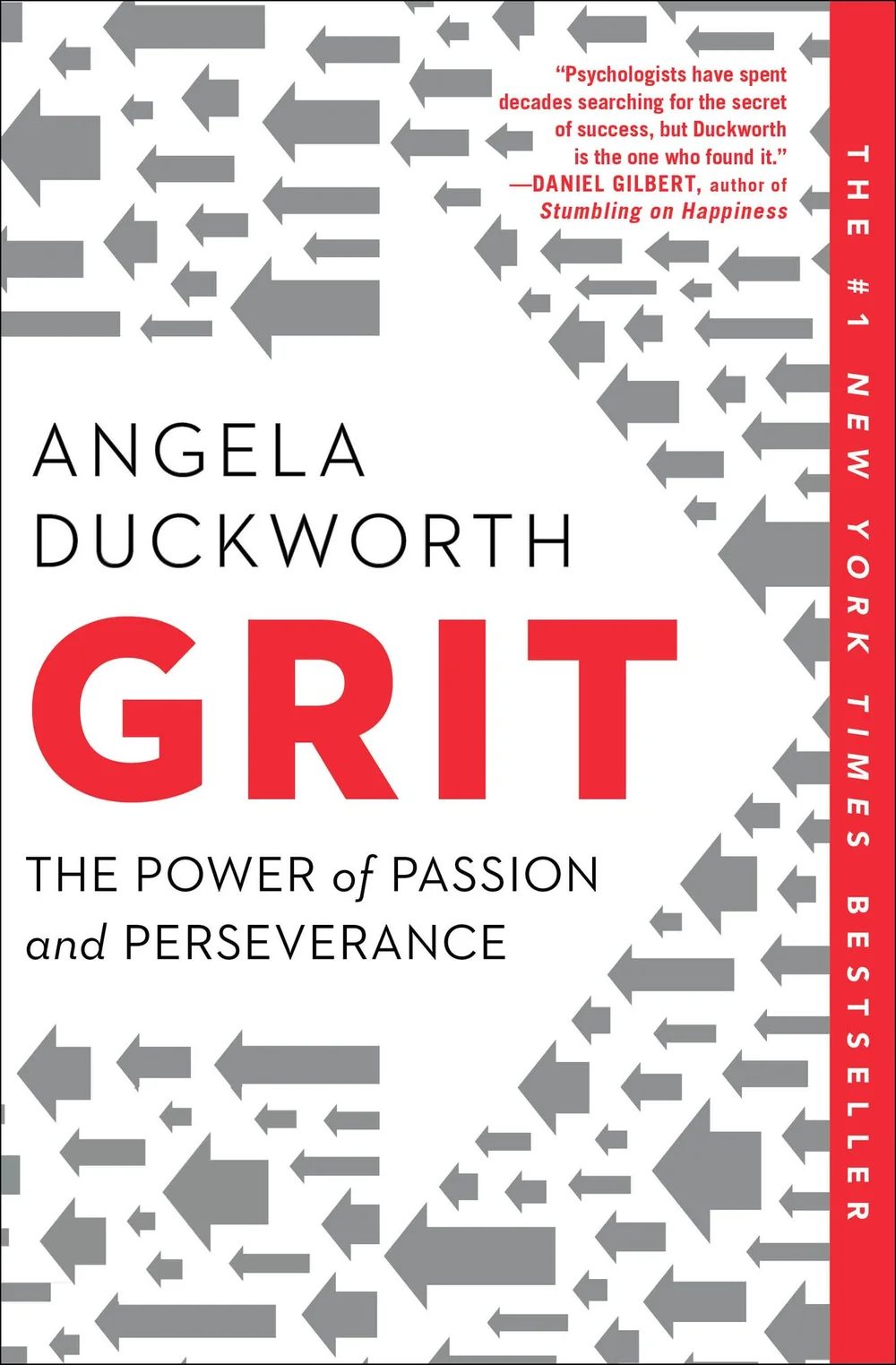
Official description: In this instant New York Times bestseller, Angela Duckworth shows anyone striving to succeed that the secret to outstanding achievement is not talent, but a special blend of passion and persistence she calls “grit.” “Inspiration for non-geniuses everywhere” (People).
The daughter of a scientist who frequently noted her lack of “genius,” Angela Duckworth is now a celebrated researcher and professor. It was her early eye-opening stints in teaching, business consulting, and neuroscience that led to her hypothesis about what really drives success: not genius, but a unique combination of passion and long-term perseverance.
In Grit, she takes us into the field to visit cadets struggling through their first days at West Point, teachers working in some of the toughest schools, and young finalists in the National Spelling Bee. She also mines fascinating insights from history and shows what can be gleaned from modern experiments in peak performance. Finally, she shares what she’s learned from interviewing dozens of high achievers—from JP Morgan CEO Jamie Dimon to New Yorker cartoon editor Bob Mankoff to Seattle Seahawks Coach Pete Carroll.
“Duckworth’s ideas about the cultivation of tenacity have clearly changed some lives for the better” (The New York Times Book Review). Among Grit’s most valuable insights: any effort you make ultimately counts twice toward your goal; grit can be learned, regardless of IQ or circumstances; when it comes to child-rearing, neither a warm embrace nor high standards will work by themselves; how to trigger lifelong interest; the magic of the Hard Thing Rule; and so much more. Winningly personal, insightful, and even life-changing, Grit is a book about what goes through your head when you fall down, and how that—not talent or luck—makes all the difference. This is “a fascinating tour of the psychological research on success” (The Wall Street Journal).
Mindset: The New Psychology of Success by Carol S. Dweck, Ph.D.
Book page: Mindset: The New Psychology of Success
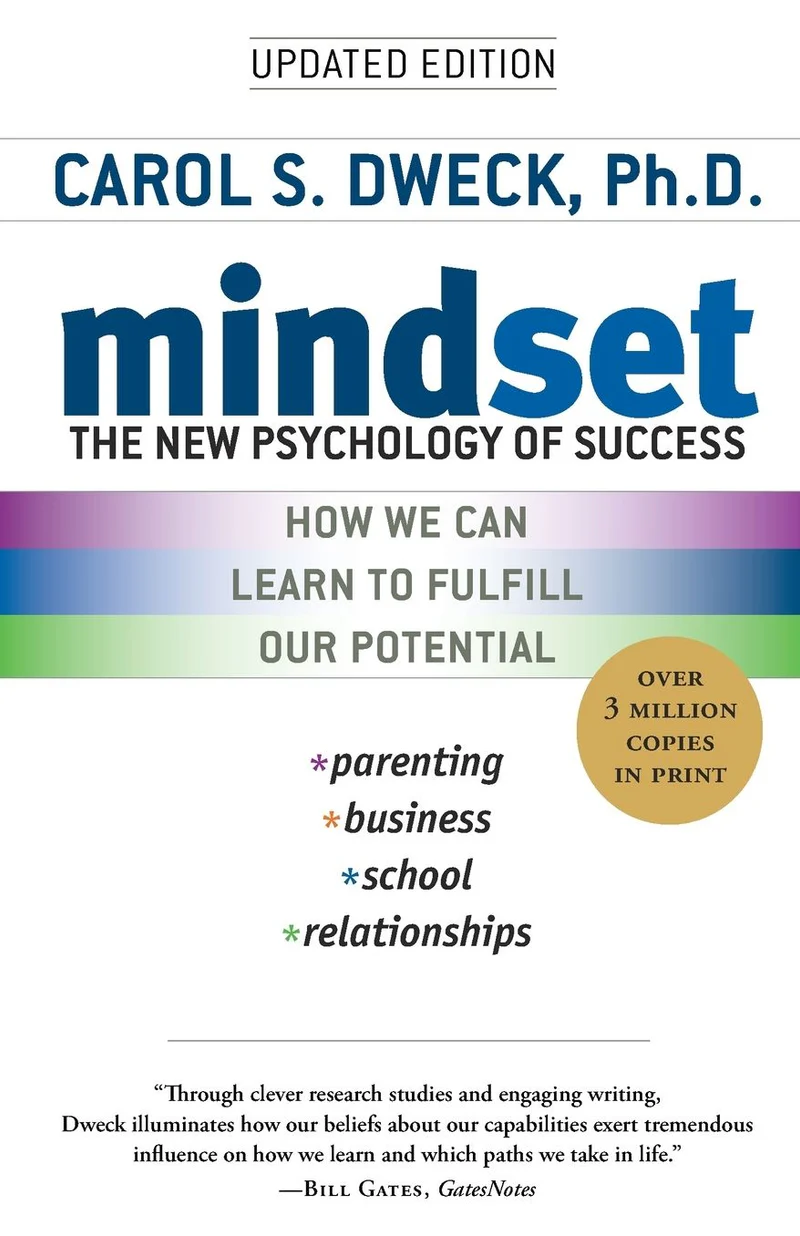
Official description: From the renowned psychologist who introduced the world to “growth mindset” comes this updated edition of the million-copy bestseller—featuring transformative insights into redefining success, building lifelong resilience, and supercharging self-improvement.
“Through clever research studies and engaging writing, Dweck illuminates how our beliefs about our capabilities exert tremendous influence on how we learn and which paths we take in life.”—Bill Gates, GatesNotes
“It’s not always the people who start out the smartest who end up the smartest.”
After decades of research, world-renowned Stanford University psychologist Carol S. Dweck, Ph.D., discovered a simple but groundbreaking idea: the power of mindset. In this brilliant book, she shows how success in school, work, sports, the arts, and almost every area of human endeavor can be dramatically influenced by how we think about our talents and abilities. People with a fixed mindset—those who believe that abilities are fixed—are less likely to flourish than those with a growth mindset—those who believe that abilities can be developed. Mindset reveals how great parents, teachers, managers, and athletes can put this idea to use to foster outstanding accomplishment.
In this edition, Dweck offers new insights into her now famous and broadly embraced concept. She introduces a phenomenon she calls false growth mindset and guides people toward adopting a deeper, truer growth mindset. She also expands the mindset concept beyond the individual, applying it to the cultures of groups and organizations. With the right mindset, you can motivate those you lead, teach, and love—to transform their lives and your own.