
🫂 Relationships
-
Socially connected people are 50% less likely to die: A meta-analysis of 148 studies covering 308,849 participants found a 50% greater likelihood of survival for people with stronger social relationships, an effect similar to well-established mortality risks like smoking. ("Social Relationships and Mortality Risk: A Meta-analytic Review," PLOS Medicine, 2010)
-
Loneliness is a risk factor for dementia: A meta-analysis drawing on longitudinal data from more than 600,000 people found loneliness increased risk of all-cause dementia, Alzheimer's disease, vascular dementia, and cognitive impairment. ("A meta-analysis of loneliness and risk of dementia using longitudinal data from >600,000 individuals," Nature Mental Health, 2024)
-
Relationship conflict has measurable physiological costs: In a controlled study of married couples given standardized blister wounds, couples showing more hostility during discussions healed more slowly than couples with less hostile interactions and had higher measured proinflammatory cytokine levels. ("Hostile Marital Interactions, Proinflammatory Cytokine Production, and Wound Healing," JAMA Psychiatry, 2005)
-
Poor social relationships raise the risk of heart disease and stroke: Pooling 16 longitudinal datasets, social isolation was associated with a 29% higher risk of incident coronary heart disease and a 32% higher risk of stroke. ("Loneliness and social isolation as risk factors for coronary heart disease and stroke: systematic review and meta-analysis of longitudinal observational studies," Heart, 2016)
-
Social ties predict resistance to infection under experimental conditions: In a rhinovirus challenge study where healthy volunteers were deliberately inoculated and quarantined, people with more diverse social ties were less likely to develop colds, produced less mucus, cleared their nasal passages more effectively, and shed less virus — with a dose-response pattern and an adjusted relative risk of 4.2 comparing those with the fewest to the most types of ties. ("Social Ties and Susceptibility to the Common Cold," JAMA, 1997)
-
Relationship quality matters, not just quantity: Across 126 studies and more than 72,000 individuals, greater marital quality was linked to better health, including lower mortality risk and lower cardiovascular reactivity during conflict. The effects are roughly comparable in size to diet and physical activity associations. ("Marital quality and health: a meta-analytic review," Psychological Bulletin, 2013)
-
Social integration is strongly correlated with various measures of physical health: The biological pathway is visible in objective biomarkers and starts early. Using four nationally representative US cohorts spanning adolescence to old age, researchers found that greater social integration was associated with lower risk of physiological dysregulation in a dose-response manner in both early and later life, measured through C-reactive protein, blood pressure, waist circumference, and body mass index (BMI). ("Social relationships and physiological determinants of longevity across the human life span," PNAS, 2016)
-
Holding a spouse's hand lowers perceived pain proportionally to marriage quality: "[E]ffects of spousal hand-holding on neural threat responses varied as a function of marital quality, with higher marital quality predicting less threat-related neural activation in the right anterior insula, superior frontal gyrus, and hypothalamus during spousal, but not stranger, hand-holding." ("Lending a hand: social regulation of the neural response to threat," Psychological Science, 2006)

📽️ Videos
Researchers find strong relationships protect long-term health and happiness: PBS NewsHour
How to Make Friends: Kurzgesagt – In a Nutshell
“Join or Die” & Building Communities to Save Democracy: Robert Putnam on The Daily Show
What actually makes a good life, according to 85 years of data: Robert Waldinger on Big Think
The great friendship collapse: Inside The Anti-Social Century: Derek Thompson on Big Think
What is the secret of a good life? Lessons from the longest study on happiness: Veritasium
The Simple Habit for a Happier Social Life: Nicholas Epley on TED
How social media sabotages your brain’s friendship mechanism: Prof. Arthur Brooks on Big Think
Making Friends as an Adult: Mark Shapiro, MD on TEDxSonomaCounty
The friendship recession: Richard Reeves on Big Think
What Makes a Good Life? Lessons from the Longest Study on Happiness: Robert Waldinger on TED
Join or Die with Robert Putnam: What Now? with Trevor Noah Podcast
Why Social Health Is Key to Happiness and Longevity: Kasley Killam on TED
Even Healthy Couples Fight — the Difference Is How: Julie and John Gottman on TED
Becoming social is easy, actually: easy, actually
Why we suck at making friends (and 3 ways to improve): Sheridan Voysey at TEDxSt Albans
Friendships, the key to happiness: CBS Sunday Morning
📰 Articles
- Strong relationships, strong health: Victoria (Australia) State Government
- Relationships and health: Wikipedia
- Maintaining healthy relationships and mental wellbeing: National Health Service (UK)
- 12 Elements of Healthy Relationships: Johns Hopkins University
📚 Books
Together: The Healing Power of Human Connection in a Sometimes Lonely World by Vivek H. Murthy MD
Book page: Together: The Healing Power of Human Connection in a Sometimes Lonely World | Barnes & Noble | Amazon
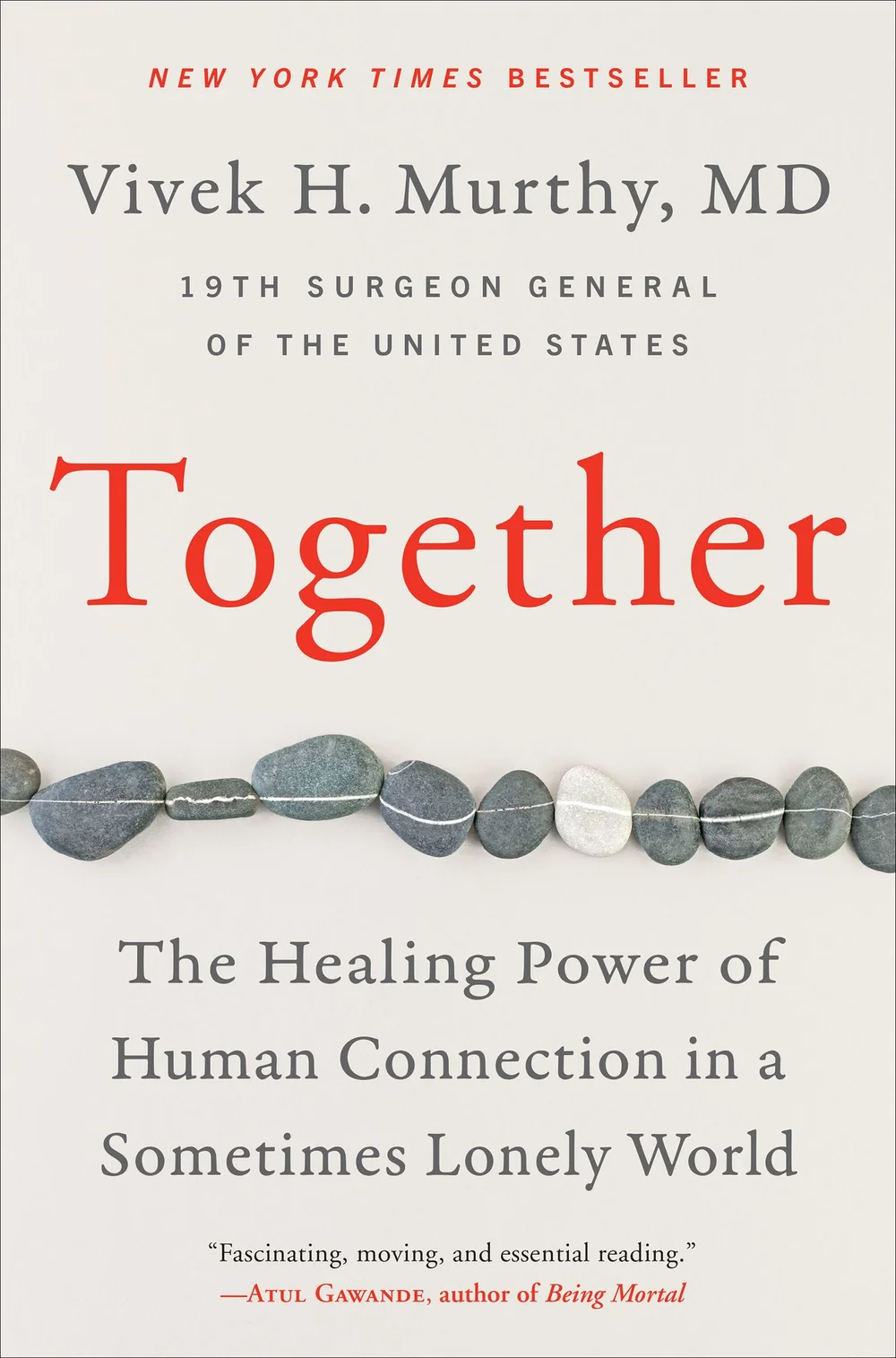
Official description: The New York Times Bestseller from Surgeon General, Vivek H. Murthy, MD.
"We have a massive, deadly epidemic hidden in plain sight: loneliness. It is as harmful to health as smoking and far more common. And as his gripping stories of the science and suffering make clear, we can do something about it. Together is fascinating, moving, and essential reading."-Atul Gawande, author of Being Mortal
"Together made me rethink much of what I believe about physical health, public policy, and the human condition. By revealing America's epidemic of loneliness-and then offering an array of remedies for the condition-Murthy has done a great service, and made Together the most important book you'll read this year."-Daniel H. Pink, #1 New York Times bestselling author of When and Drive
The book we need NOW to avoid a social recession, Murthy's prescient message is about the importance of human connection, the hidden impact of loneliness on our health, and the social power of community.
Humans are social creatures: In this simple and obvious fact lies both the problem and the solution to the current crisis of loneliness. In his groundbreaking book, the 19th surgeon general of the United States Dr. Vivek Murthy makes a case for the loneliness epidemic as a public health concern: a root cause and contributor to many of the epidemics sweeping the world today from alcohol and drug addiction to violence to depression and anxiety. Loneliness, he argues, is affecting not only our health, but also how our children experience school, how we perform in the workplace, and the sense of division and polarization in our society.
But, at the center of our loneliness is our innate desire to connect. We have evolved to participate in community, to forge lasting bonds with others, to help one another, and to share life experiences. We are, simply, better together.
The lessons in Together on building a more connected life have immediate relevance and application. These four key strategies will help us not only to weather this crisis, but also to heal our social world far into the future.
Spend time each day with those you love. Devote at least 15 minutes each day to connecting with those you most care about.
Focus on each other. Forget about multitasking and give the other person the gift of your full attention, making eye contact, if possible, and genuinely listening.
Embrace solitude. The first step toward building stronger connections with others is to build a stronger connection with oneself. Meditation, prayer, art, music, and time spent outdoors can all be sources of solitary comfort and joy.
Help and be helped. Service is a form of human connection that reminds us of our value and purpose in life. Checking on a neighbor, seeking advice, even just offering a smile to a stranger six feet away, all can make us stronger.
During Murthy's research for Together, he found that there were few issues related to our need for social connection that elicited as much enthusiastic interest from both very conservative and very liberal members of Congress, from young and old people, or from urban and rural residents alike. Loneliness was something so many people have known themselves or have seen in the people around them. In the book, Murthy also shares his own deeply personal experiences with the subject-from struggling with loneliness in school, to the devastating loss of his uncle who succumbed to his own loneliness, as well as the important example of community and connection that his parents modeled. Simply, it's a universal condition that affects the mental health of all of us directly or through the people we love-now more than ever.
The Art and Science of Connection: Why Social Health Is the Missing Key to Living Longer, Healthier, and Happier by Kasley Killam, MPH
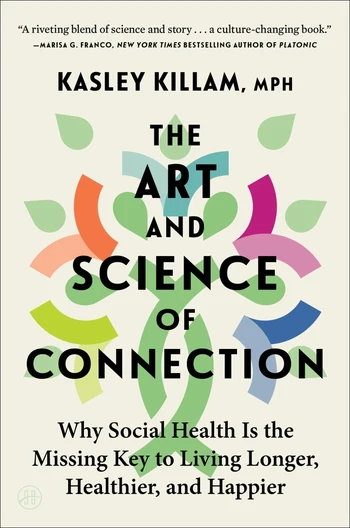
Official description: A groundbreaking redefinition of what it means to be healthy that introduces the need for social health—the part of wellbeing that comes from feeling connected—to truly flourish.
Exercise. Eat a balanced diet. Go to therapy. Most wellness advice is focused on achieving and maintaining good physical and mental health. But Harvard-trained social scientist and pioneering social health expert Kasley Killam reveals that this approach is missing a vital component: human connection.
Relationships not only make us happier, but also are critical to our overall health and longevity. Research shows that people with a strong sense of belonging are 2.6 times more likely to report good or excellent health. Perhaps even more astonishingly, people who lack social support are up to 53% more likely to die from any cause. Yet social health has been overlooked and underappreciated—until now.
Just as we exercise our physical muscles, we can strengthen our social muscles. Weaving together cutting-edge science, mindset shifts, and practical wisdom, Killam offers the first methodology for how to be socially healthy. An antidote to the loneliness epidemic and an inspiring manifesto for seeing wellbeing as not only physical and mental, but also social, The Art and Science of Connection is a handbook for thriving.
In this essential book, you will:
- Learn a simple yet powerful framework to understand, evaluate, and bolster your social health.
- Discover the exact strategy or habit you need, as well as research-backed tips, to cultivate and sustain meaningful connection now and throughout your life.
- Glean actionable insights to develop a sense of community in your neighborhood, at work, and online from a spirited group of neighbors in Paris, the CEO of a major healthcare company, and an artificially intelligent chatbot.
- Get an insider look at the innovative ways that doctors, teachers, entrepreneurs, architects, government leaders, and everyday people are catalyzing a movement toward a more socially healthy society.
The Art and Science of Connection will transform the way you think about each interaction with a friend, family member, coworker, or neighbor, and give you the tools you need to live a more connected and healthy life—whether you are an introvert or extrovert, if you feel stretched thin, and no matter your age or background. Along the way, Killam will reveal how a university student, a newlywed, a working professional, and a retired widow overcame challenges to thrive through connection—and how you can, too.
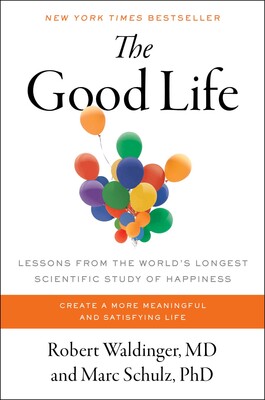
The Good Life: Lessons from the World's Longest Scientific Study of Happiness by Robert Waldinger MD and Marc Schulz PhD
Book page | Hoopla | Barnes & Noble | Amazon
Official description: What makes for a happy life, a fulfilling life? A good life? In their "captivating" (The Wall Street Journal) book, the directors of the Harvard Study of Adult Development, the longest scientific study of happiness ever conducted, show that the answer to these questions may be closer than you realize.
What makes a life fulfilling and meaningful? The simple but surprising answer is: relationships. The stronger our relationships, the more likely we are to live happy, satisfying, and healthier lives. In fact, the Harvard Study of Adult Development reveals that the strength of our connections with others can predict the health of both our bodies and our brains as we go through life.
The invaluable insights in this book emerge from the revealing personal stories of hundreds of participants in the Harvard Study as they were followed year after year for their entire adult lives, and this wisdom was bolstered by research findings from many other studies. Relationships in all their forms-friendships, romantic partnerships, families, coworkers, tennis partners, book club members, Bible study groups-all contribute to a happier, healthier life. And as The Good Life shows us, it's never too late to strengthen the relationships you already have, and never too late to build new ones. The Good Life provides examples of how to do this.
Dr. Waldinger's TED Talk about the Harvard Study, "What Makes a Good Life," has been viewed more than 42 million times and is one of the ten most-watched TED talks ever. The Good Life has been praised by bestselling authors Jay Shetty ("an empowering quest towards our greatest need: meaningful human connection"), Angela Duckworth ("In a crowded field of life advice...Schulz and Waldinger stand apart"), and happiness expert Laurie Santos ("Waldinger and Schulz are world experts on the counterintuitive things that make life meaningful").
With "insightful [and] interesting" (Daniel Gilbert, New York Times bestselling author of Stumbling on Happiness) life stories, The Good Life shows us how we can make our lives happier and more meaningful through our connections to others.
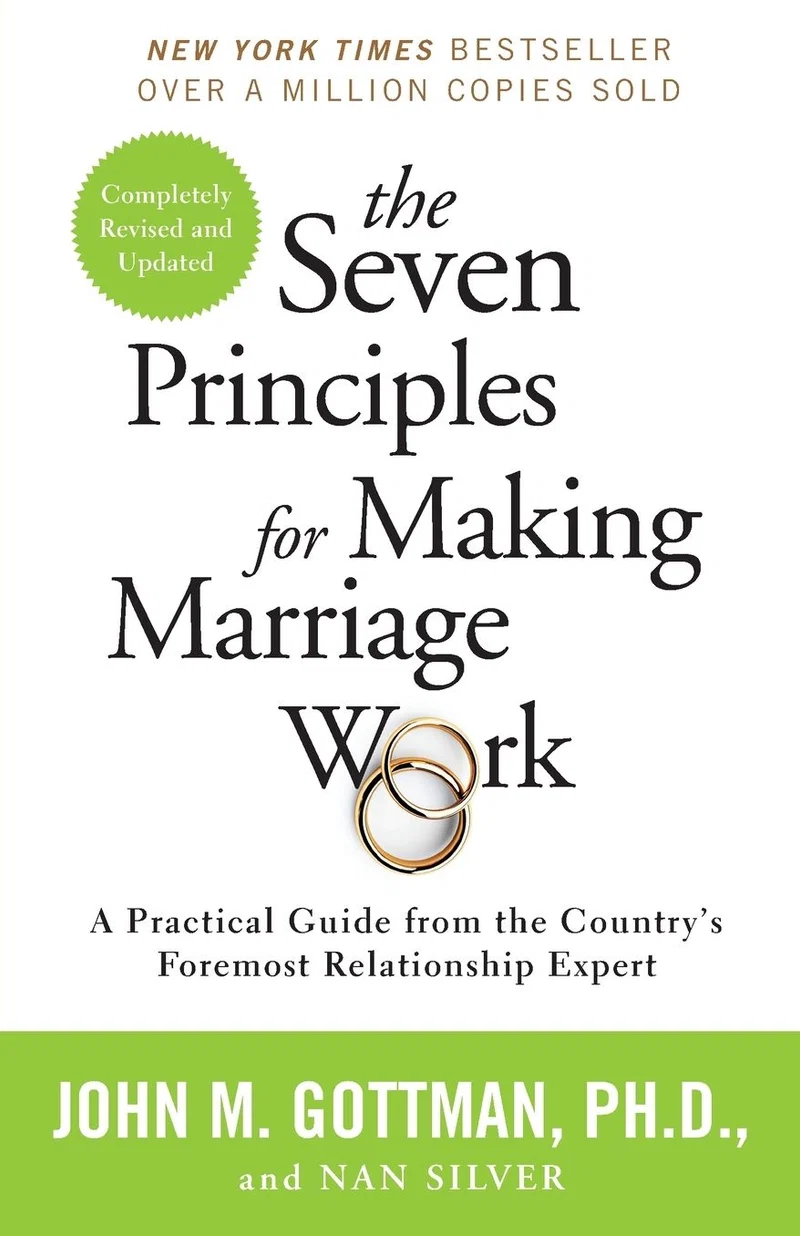
The Seven Principles for Making Marriage Work: A Practical Guide from the Country's Foremost Relationship Expert by John M. Gottman, PhD and Nan Silver
Book page | Hoopla | Barnes & Noble | Amazon
Official description: Over a million copies sold! “An eminently practical guide to an emotionally intelligent—and long-lasting—marriage.”—Daniel Goleman, author of Emotional Intelligence
The Seven Principles for Making Marriage Work has revolutionized the way we understand, repair, and strengthen marriages. John Gottman’s unprecedented study of couples over a period of years has allowed him to observe the habits that can make—and break—a marriage. Here is the culmination of that work: the seven principles that guide couples on a path toward a harmonious and long-lasting relationship.
Straightforward yet profound, these principles teach partners new approaches for resolving conflicts, creating new common ground, and achieving greater levels of intimacy. Gottman offers strategies and resources to help couples collaborate more effectively to resolve any problem, whether dealing with issues related to sex, money, religion, work, family, or anything else.
Packed with new exercises and the latest research out of the esteemed Gottman Institute, this revised edition of The Seven Principles for Making Marriage Work is the definitive guide for anyone who wants their relationship to attain its highest potential.
Bowling Alone: The Collapse and Revival of American Community (Revised and Updated) by Prof. Robert D. Putnam
Book page: Bowling Alone: The Collapse and Revival of American Community (Revised and Updated) | Barnes & Noble | Amazon
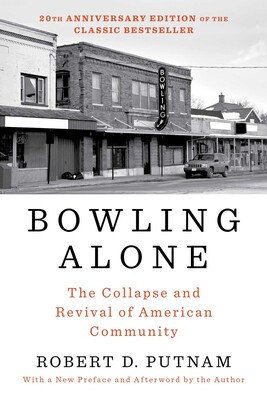
Official description: Updated to include a new chapter about the influence of social media and the Internet—the 20th anniversary edition of Bowling Alone remains a seminal work of social analysis, and its examination of what happened to our sense of community remains more relevant than ever in today’s fractured America.
Twenty years, ago, Robert D. Putnam made a seemingly simple observation: once we bowled in leagues, usually after work; but no longer. This seemingly small phenomenon symbolized a significant social change that became the basis of the acclaimed bestseller, Bowling Alone, which The Washington Post called “a very important book” and Putnam, “the de Tocqueville of our generation.”
Bowling Alone surveyed in detail Americans’ changing behavior over the decades, showing how we had become increasingly disconnected from family, friends, neighbors, and social structures, whether it’s with the PTA, church, clubs, political parties, or bowling leagues. In the revised edition of his classic work, Putnam shows how our shrinking access to the “social capital” that is the reward of communal activity and community sharing still poses a serious threat to our civic and personal health, and how these consequences have a new resonance for our divided country today. He includes critical new material on the pervasive influence of social media and the internet, which has introduced previously unthinkable opportunities for social connection—as well as unprecedented levels of alienation and isolation.
At the time of its publication, Putnam’s then-groundbreaking work showed how social bonds are the most powerful predictor of life satisfaction, and how the loss of social capital is felt in critical ways, acting as a strong predictor of crime rates and other measures of neighborhood quality of life, and affecting our health in other ways. While the ways in which we connect, or become disconnected, have changed over the decades, his central argument remains as powerful and urgent as ever: mending our frayed social capital is key to preserving the very fabric of our society.